
Our process
From first call to dry structure — here's exactly what to expect.
You call. Someone answers. We ask the right questions — source, duration, affected areas, contents at risk and mobilize the right crew and equipment. We give you immediate guidance on safe steps you can take before we arrive.
On arrival, we conduct a full moisture assessment not just the visible wet areas. Using professional moisture meters and, where needed, thermal imaging, we map all affected areas including hidden moisture in walls, subfloor, ceilings, and cavities.
Industrial truck-mounted and portable extraction equipment removes standing water and as much moisture as possible from carpet, flooring, and structural materials before drying begins.
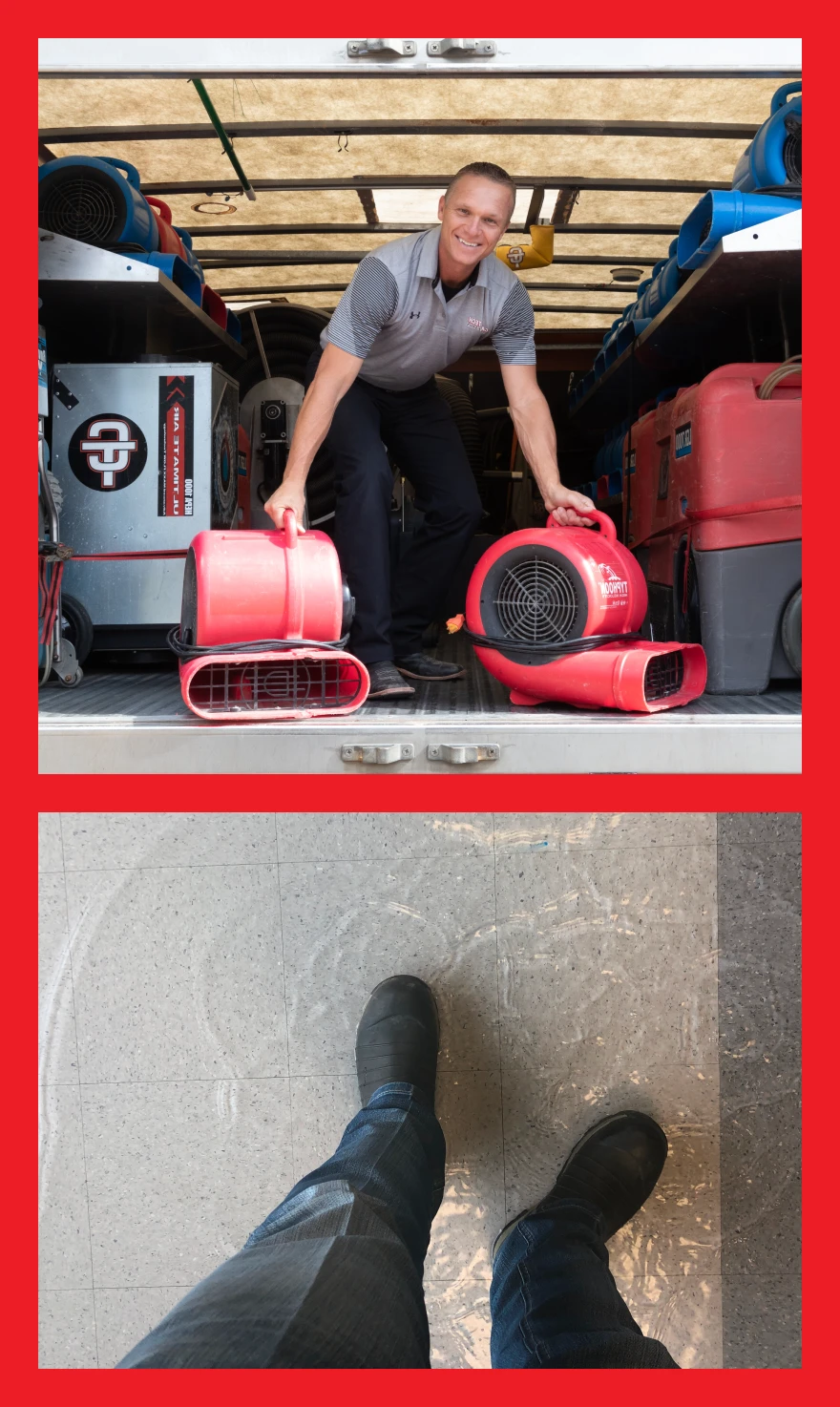
Commercial-grade air movers and dehumidifiers are placed throughout the affected area to accelerate evaporation from building materials. Drying is a process — typically three to five days — not a one-visit fix. We monitor and adjust equipment placement daily based on moisture readings.
We return daily during the drying phase to take moisture readings, document progress, adjust equipment, and assess for any developing issues. We don't set equipment and disappear.
Throughout the process we document moisture levels, affected materials, equipment placed, and daily readings — building the evidence file your adjuster will need. We've worked with virtually every major carrier.
Once the structure is dry, we assess what materials need repair or replacement and coordinate next steps — whether that's reconstruction, flooring replacement, or other work. We connect to our CT Construction division for full-scope rebuilds when needed.