

Where Mold Hides
Mold is often behind the surface you can see.
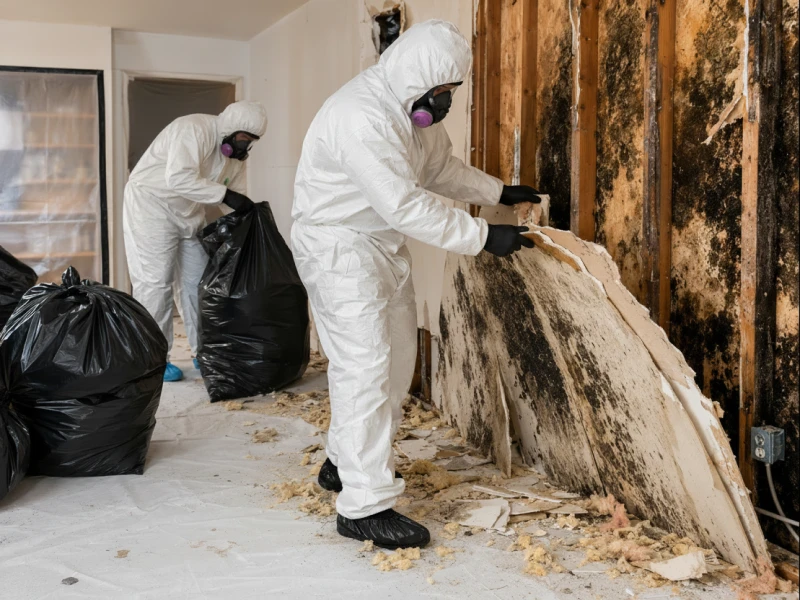
Behind walls and drywall
In attics
Under flooring
In crawl spaces
Around windows and exterior walls
In HVAC systems and ductwork
In bathrooms without adequate ventilation
Post-water damage
Our process
From assessment to clear structure — here's exactlywhat to expect.
We assess the visible mold, identify the moisture source, and use moisture meters and thermal imaging to map the full extent of affected materials — including growth that isn't visible at the surface. You need to know what you're actually dealing with before any remediation begins.
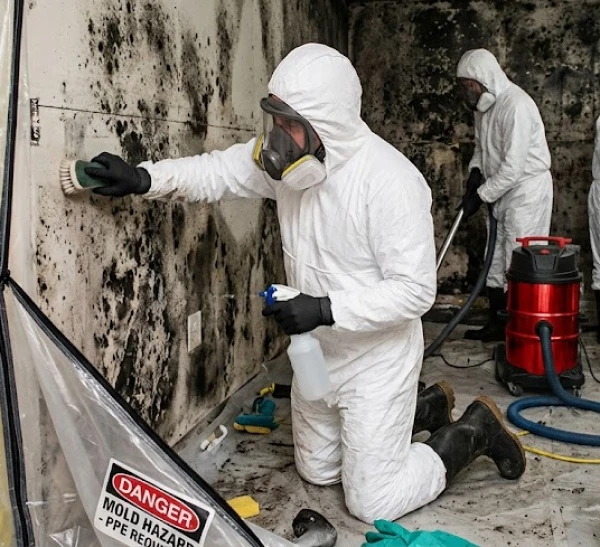
Affected areas are isolated with physical barriers and negative air pressure is established using HEPA-filtered air scrubbers. This prevents spores disturbed during remediation from spreading to unaffected areas of the structure. Containment is what separates professional remediation from DIY attempts that spread the problem.
HEPA air scrubbers run continuously throughout remediation, capturing airborne spores and maintaining clean air in the work area and the occupied portions of the structure.
Heavily affected porous materials — drywall, insulation, flooring, framing where necessary — are removed and disposed of properly. Surface mold on non-porous materials is cleaned using EPA-registered antimicrobial solutions. HEPA vacuuming removes settled spores from surfaces throughout the contained area.
Treated surfaces receive EPA-registered antimicrobial application to address any remaining biological material and inhibit regrowth.
Mold will return if the moisture source isn't addressed. We identify the source during assessment — whether it's an active leak, inadequate ventilation, condensation, or unresolved water damage — and ensure it's corrected as part of the remediation scope. This may involve coordination with a plumber, HVAC technician, or CT Construction for structural repairs.
Post-remediation verification confirms the work is complete. Documentation is provided for insurance purposes and for property records.
When materials have been removed, CT Construction coordinates the rebuild — replacing drywall, insulation, flooring, and any other structural components, returning the space to its pre-mold condition.
Fixing the mold without fixing the moisture is only half the job.
- The Root Cause: Mold is a symptom; moisture is the source.
-
Common Sources:
Obvious: Roof leaks, plumbing failures, or flooded basements.
Hidden/Chronic: Attic-vented exhaust fans, poor crawl space ventilation, or slow slab leaks. - Our Approach: We identify and document the moisture source during assessment. If the moisture stays, the mold returns—so we don’t consider the job done until a correction plan is in place.
What mold exposure can mean.
- Potential Symptoms: Mold exposure is linked to respiratory irritation, headaches, and heightened allergy responses.
- High-Risk Individuals: Those with asthma, immune compromise, or existing respiratory sensitivities are most affected.
- The Warning Sign: If indoor symptoms improve when you leave the property, mold is worth investigating.
- Our Role vs. Medical Advice: We handle the structural assessment and remediation; consult a healthcare professional for all medical concerns.